Loading...
Serving Indian Trail, NC and surrounding areas. (704) 520-5687
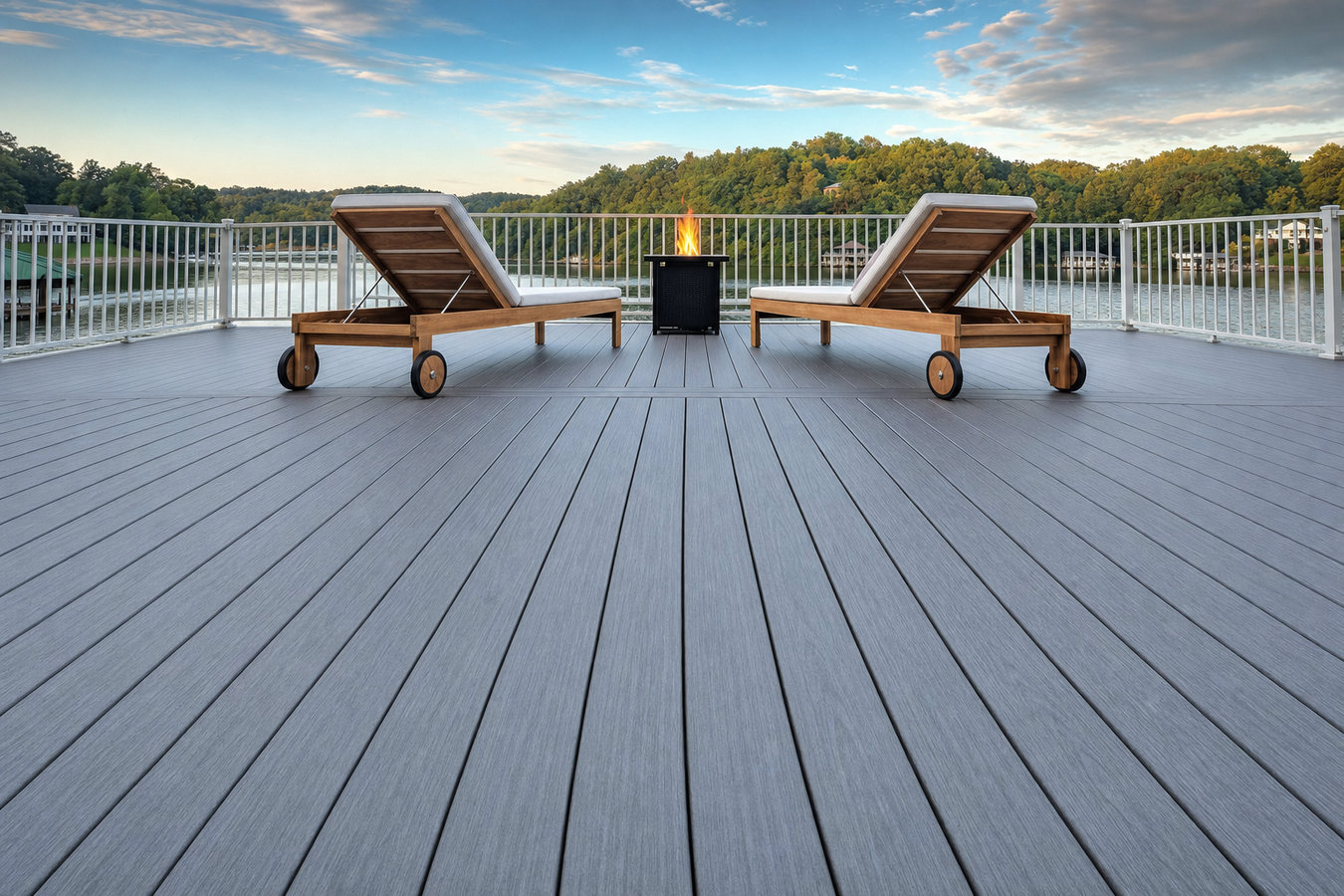
Composite decks hold up through Indian Trail's humid summers without the annual sanding and staining that wood demands. We install them right, with permits, so the deck is still looking sharp a decade from now.
Composite deck installation in Indian Trail means building a pressure-treated lumber frame, then laying composite boards on top - boards made from wood fibers and recycled plastic that resist rot, splintering, and fading. Most residential decks take two days to two weeks of active construction once permits are in hand. This is the most common choice for new deck builds in the area because Indian Trail's hot, humid summers are hard on traditional wood, and homeowners here have seen what happens when a wood deck goes without proper sealing for a couple of seasons. Many homeowners also ask about pairing composite boards with quality deck railing installation to finish the look and meet Union County safety requirements.
The frame beneath the boards matters as much as the boards themselves. Post footings sized for Indian Trail's clay soil, properly spaced joists, and correct board gapping for airflow underneath - these hidden details are what determine whether the deck holds up over 25 years or starts showing problems in five. Ask any contractor you consider how they set their footings and size their joists. The answer tells you a lot.
If you press your foot down on a deck board and it feels spongy, or you notice boards that are visibly cracked and pulling away from the frame, your deck has likely reached the end of its useful life. In Indian Trail's humid summers, wood decks that are not sealed regularly deteriorate faster than homeowners expect. At a certain point, repairing individual boards stops making financial sense.
If you have been paying to have your wood deck refinished every year or two and it still looks faded or blotchy within months, the wood itself is no longer holding up. The heat and humidity in this part of North Carolina are relentless on wood finishes. Switching to composite means you stop paying for that annual maintenance cycle entirely.
Indian Trail's real estate market has been competitive, and buyers here pay close attention to outdoor living spaces. A new composite deck signals low maintenance and move-in readiness - two things buyers in this market actively look for. A worn or dated deck can slow down a sale; a sharp new one can do the opposite.
Many Indian Trail homes built in the 1990s and early 2000s came with minimal outdoor decking. If you have been making do with a small stoop, or if the existing deck was never permitted, a new installation gives you both usable space and a clean inspection record - which matters if you ever sell.
We install composite decking for both new builds and deck replacements across Indian Trail and the surrounding area. Every installation starts with proper footings set to account for Union County's clay soil, a pressure-treated lumber frame built to support the deck's load, and composite boards installed with the correct spacing and fasteners for long-term performance. For homeowners exploring options, we also install Trex deck installation, one of the most recognized composite brands available, if you have a specific product preference.
Beyond the decking surface, we handle railings, stairs, and any built-in features you want as part of the project. We manage the permit application with Union County and, for neighborhoods with HOA architectural review requirements, we help you prepare that submission before construction begins. The goal is that you are not navigating any of that paperwork alone.
For homeowners adding outdoor living space where no deck currently exists.
For homeowners replacing a deteriorating or unpermitted wood deck with a lower-maintenance composite surface.
For homeowners who have researched specific composite brands and want a contractor experienced with that product.
Completes the deck with composite or metal railing systems that meet Union County code and your HOA guidelines.
Indian Trail sits in the Piedmont region of North Carolina, where summers are long, hot, and humid. That combination is exactly what composite decking was designed to handle. Wood decks in this climate that are not maintained every one to two years will show rot, warping, and fading faster than homeowners expect - and the ongoing cost of that maintenance adds up. Composite boards resist that cycle. They also sit on a pressure-treated frame set in footings designed for Union County's red clay soil, which expands and contracts with the seasons and will shift inadequate footings over time. Getting the foundation right from the start matters here more than in many other parts of the country.
We work regularly in communities throughout this part of the county, including neighborhoods near Stallings and out toward Waxhaw. Most neighborhoods in this area have HOA rules that govern deck size, railing style, and sometimes the brand or color of composite boards. We know to ask about those requirements upfront and handle the submission before any work begins.
Reach out by phone or the form below. We respond within 1 business day. We will ask a few basic questions - size, HOA situation, timeline - so we know how to prepare for the site visit.
We come to your home, measure the space, and discuss board brand and color options, railing styles, and any stair work. Most contractors in this area provide written estimates within a few days. Get at least two or three so you have a real comparison.
Once you sign a contract, we submit the permit application to Union County and handle your HOA submission if needed. This stage takes one to three weeks - it is normal to wait here, and your project will not start until both approvals are in hand.
We set footings, build the pressure-treated frame, install the composite boards and railing, and pass county inspection. When the work is done, we walk you through the finished deck and leave you with copies of the permit and inspection records.
We respond within 1 business day. There is no obligation - just an honest conversation about what you need and what it will cost. After you submit, someone from our team will call to schedule a free on-site estimate.
(704) 520-5687Indian Trail falls under Union County's building jurisdiction, and we pull the permit for every composite deck we install. You get a county inspection at key stages, documentation you can hand to a future buyer, and a deck built to the structural standards that protect your home.
The red clay soil here expands when wet and contracts when dry. We set footings deep enough and size them to resist that seasonal movement. It is one of those behind-the-scenes details that separates a deck that holds perfectly level for 20 years from one that starts to shift within a few seasons.
You receive a written contract with the scope of work, materials, and total price before we file the permit. No vague estimates, no mid-project cost increases, and no pressure to add features you did not ask for. You know what you agreed to, start to finish.
Indian Trail's planned communities frequently require HOA architectural review before construction starts. We review your guidelines early, prepare the submission, and make sure the design is approved before we ever apply for the county permit. You do not find out about a problem after the deck is already built.
The American Wood Council publishes the Prescriptive Residential Wood Deck Construction Guide, which lays out how deck frames - including joist spacing and footing depth - should be built. Knowing this standard exists gives you a way to evaluate whether a contractor is cutting corners or building it correctly.
Trex is one of the most recognized composite decking brands - see how it compares for your specific project and yard.
Learn MoreRailings finish the composite deck and bring it up to Union County code - we install composite and metal systems to match.
Learn MoreSpring and summer project slots book fast in Indian Trail. Contact us now for a free written estimate and we will lock in your start date before the schedule closes.