Loading...
Serving Indian Trail, NC and surrounding areas. (704) 520-5687
A wobbly railing is not just an eyesore - it is a safety hazard. We install deck railings that pass county inspection and stay solid through Indian Trail's heat, humidity, and seasonal soil movement.
Deck railing installation in Indian Trail, NC covers new railings on elevated decks, full replacements of aging or rotted wood rails, and railing additions on newly built deck platforms, with most standard single-level jobs completed in one to two days once Union County permits are approved.
Indian Trail has been one of the fastest-growing towns in North Carolina over the past two decades, and many of the builder-grade wood railings installed on homes from the 2000s and early 2010s are now showing rot, wobble, or code issues. That means a lot of homeowners here are dealing with a replacement rather than a first install - and the most common sign is a railing that moves when you push on it. In North Carolina, any deck surface sitting 30 inches or more above the ground is required to have a railing, so a missing or failed rail is also a safety code issue. Homeowners who are replacing railings on a larger or more complex build often find it efficient to bundle this work with a multi-level deck project so railing heights and stair rail runs are all designed and built together.
We pull Union County permits, handle HOA submissions, set posts correctly into the deck frame, and install the railing system from posts through balusters. Call us or request a free estimate and we will assess your deck and give you a written number.
Stand at the edge of your deck and push firmly on the top rail with both hands. If it moves, flexes, or feels loose at the post, the railing is no longer structurally sound. This is the most important warning sign - a wobbly railing can fail suddenly, especially if a child or elderly family member leans against it. Do not wait to address this one.
Indian Trail's humid summers and frequent rain create ideal conditions for wood rot, especially on older builder-grade decks. If the wood feels soft when you press it with a screwdriver, or if you see dark staining and crumbling at the base of posts, the railing has likely rotted from the inside out and needs to be replaced - not just repainted. Rot spreads once it starts in this climate.
Some older Indian Trail homes have elevated decks that were built before current safety requirements were enforced, or had railings removed and never replaced. If your deck surface sits 30 inches or more above the yard and there is nothing to hold onto at the edge, you are missing a required safety feature - and you would be liable if someone fell.
If you have received a notice from your homeowners association about your deck's appearance, or if you are preparing to sell your home and want to avoid a buyer's inspection flagging the railing, it may be time for an upgrade. Many Indian Trail HOAs have updated their design standards in recent years, and older railings sometimes no longer meet current community expectations.
We install the full range of railing materials used in residential deck construction in the Charlotte metro area - wood, composite, aluminum, cable, and glass panel systems. The most important part of any installation is the post attachment: posts have to be bolted into the deck frame correctly, not just face-mounted to the rim board, because a post that looks solid on day one can work loose within a year if it was not attached to the structural framing. We handle every installation to the standards in the American Wood Council's Prescriptive Residential Wood Deck Construction Guide, which means posts, rails, and balusters are all sized and spaced to meet the safety requirements that Union County inspectors check. For homeowners adding railings to a new or expanded deck, we also handle the full custom deck design and build so the railing and the deck platform are planned as one project.
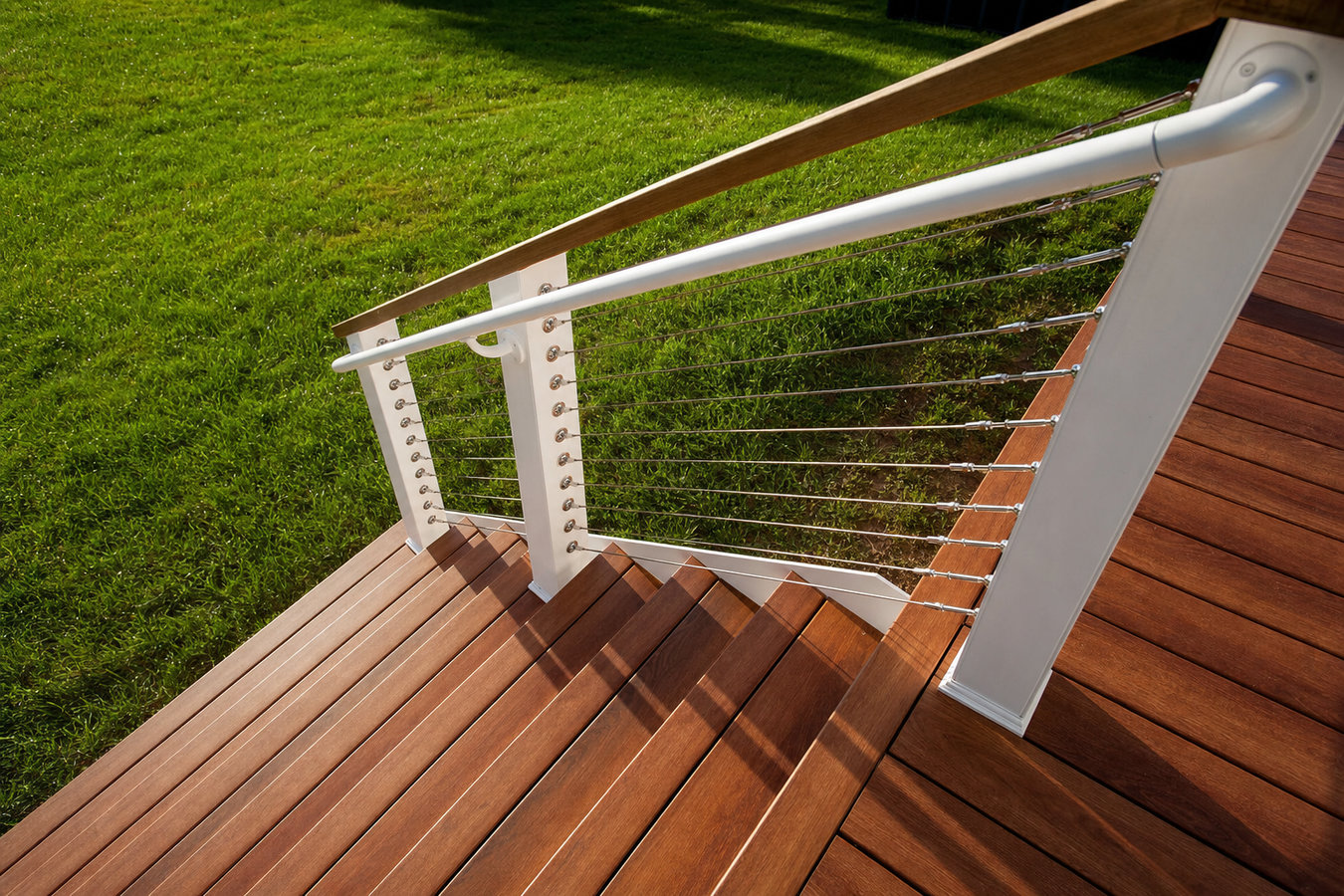
Baluster spacing is another detail that matters more than most homeowners realize. The gaps between balusters must be small enough that a 4-inch sphere cannot pass through - this prevents young children from getting their heads stuck. We set spacing correctly on every job. For homeowners who want to preserve sightlines to the yard, cable railing for decks and glass panel systems are a popular choice in this area. Material selection also affects how much upkeep you will do over the years - Indian Trail's humid climate is hard on untreated wood, so composite and aluminum options often make more sense for low-maintenance households.
Best for homeowners who want a traditional look and are comfortable with regular cleaning and sealing to maintain it in Indian Trail's humid climate.
Suits homeowners who want a wood-look finish without the annual maintenance - composite holds up well in the heat and humidity here with minimal upkeep.
Ideal for homeowners who want a durable, low-maintenance option that resists rust and moisture and comes in a range of colors to match the home's exterior.
Good for homeowners who want to preserve the view of their yard or landscaping - cable and glass systems are durable in this climate and give decks a modern, open feel.
Indian Trail's housing stock was largely built between 1990 and 2015 during the town's rapid suburban growth. Many of those original builder-grade wood railings are now 15 to 20 years old - right at the age where rot, wobble, and failed post connections are common. The area's humid subtropical climate accelerates wood decay compared to drier regions: moisture works into end grain and post bases, and rot can compromise a railing structurally while it still looks presentable from a distance. Indian Trail's clay soil also plays a role - seasonal expansion and contraction can shift deck footings slightly over time, which puts stress on post-to-frame connections and can cause previously solid railings to develop movement. The North Carolina Department of Insurance Engineering and Building Codes sets the residential safety standards that govern railing height, baluster spacing, and post strength requirements across all our projects.
Many Indian Trail neighborhoods are also governed by HOAs with design guidelines that specify railing materials and colors - rules that older railings may no longer satisfy. We regularly install and replace deck railings for homeowners in Matthews and Stallings, where the same climate conditions, soil movement patterns, and HOA approval requirements shape every railing project we take on.
We will ask a few quick questions - the size of your deck, whether you are replacing an existing railing or starting fresh, and what materials interest you. Most homeowners hear back within one business day. We schedule an in-person visit before giving any price because the condition of the existing deck frame matters a lot to the final cost.
We look at your deck's framing and posts to confirm the structure is solid enough to support new railings. We measure total linear footage, note corners and stair sections, and walk through material and style options with you. You receive a written estimate that breaks out labor and materials separately, not a single lump sum.
We apply for the Union County building permit before any work begins and provide drawings for any required HOA review. The permit typically takes a few business days to be approved. A contractor who wants to skip this step is one worth walking away from - the inspection that follows protects you.
On installation day, we remove old railing if needed, set and secure the new posts first, then attach rails and fill in balusters or panels. The county inspector verifies the finished work. We then walk the railing with you, show you the attachment points, cover care instructions for your chosen material, and confirm you are satisfied before we leave.
Free estimate, no obligation. We reply within one business day.
(704) 520-5687We pull the Union County permit on every railing project and welcome the inspection that follows. That inspection gives you documented proof the railing was installed correctly - which protects you at resale and when someone in your family leans on the rail.
We bolt posts into the deck's structural framing, not just face-mounted to the rim board. That distinction is what separates a railing that stays solid for 20 years from one that starts to wobble within a few seasons - especially given Indian Trail's seasonal soil movement.
We help homeowners choose materials that hold up in this area's heat and humidity, not just whatever is cheapest. A railing that looks good on day one but rots in five years is not a good investment - we will tell you honestly what each material requires to last in this climate.
Many Indian Trail neighborhoods - including parts of Bonterra, Chestnut Square, and other planned developments - have design guidelines that cover railing style and color. We check your HOA requirements and submit for approval before ordering materials, so you are not in a situation where the work has to be redone to satisfy community standards.
A railing that passes inspection and feels completely solid when someone pushes on it is the minimum we aim for on every job. The homeowner who stops worrying about the railing every time guests are on the deck is the outcome we are actually working toward.
Build a new deck from the ground up with railing designed in from the start rather than added after the fact.
Learn MoreAdding a multi-level deck to a sloped yard means stair rails and upper-level railings all planned and built together.
Learn MoreSpring booking fills fast in the Charlotte metro - reach out now and we will get your estimate on the calendar before the season fills up.