Loading...
Serving Indian Trail, NC and surrounding areas. (704) 520-5687
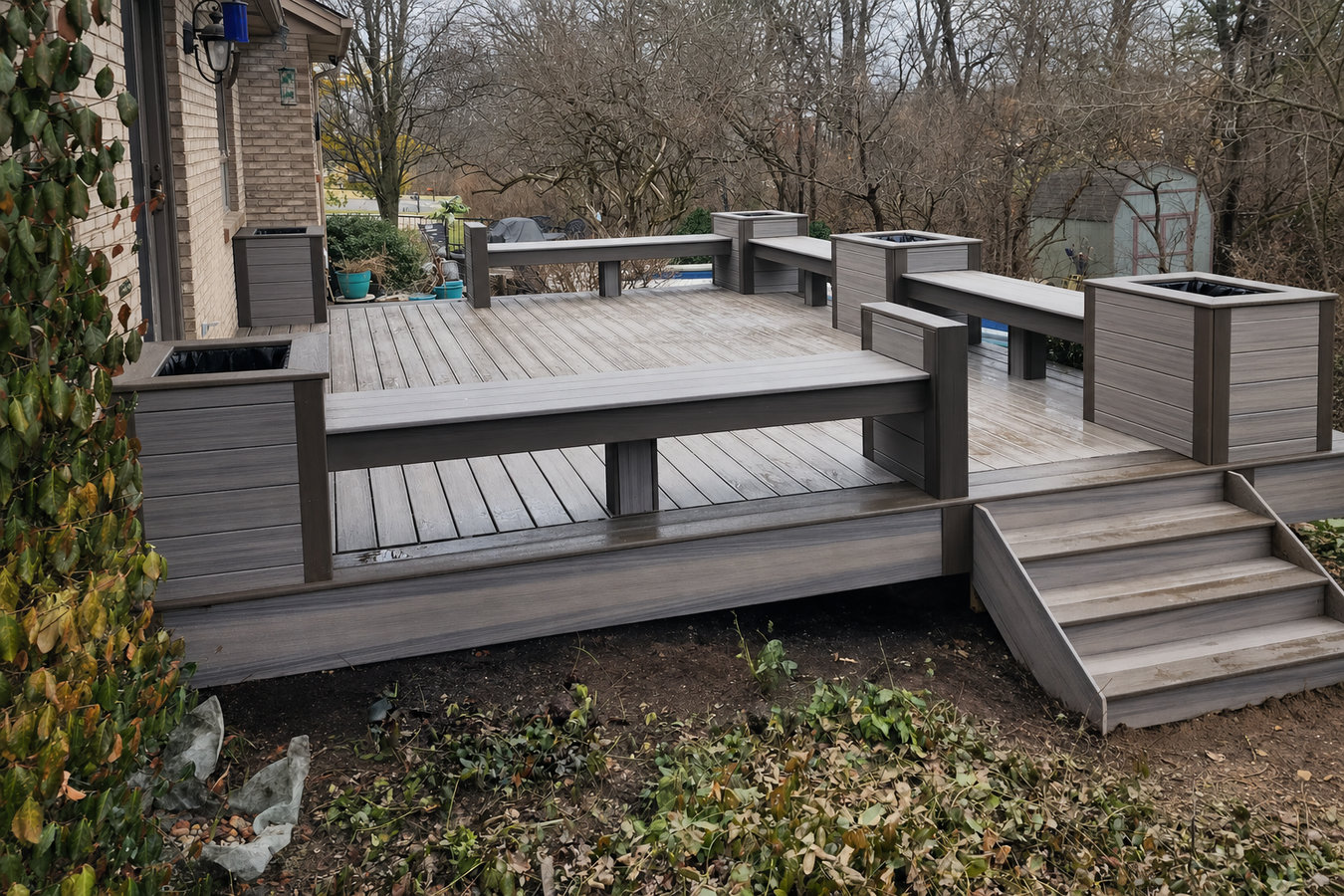
Stop spending every spring sanding and staining. A Trex composite deck gives you a beautiful outdoor space that holds up through Indian Trail summers without the upkeep.
Trex deck installation in Indian Trail means building a composite deck using a frame of pressure-treated lumber topped with Trex boards, most jobs in the 300-500 square foot range take one to two weeks of active construction once permits are in hand.
If you have been putting off a deck because you do not want the annual maintenance hassle that comes with wood, Trex is the most straightforward solution. Indian Trail's hot, humid summers - with humidity often above 70% from June through August - are exactly the conditions that cause wood decks to crack, gray, and splinter ahead of schedule. Trex was designed for climates like this one. If you are also considering a traditional option, our composite deck installation page covers all composite materials in detail.
Step on each section of your deck and pay attention. If any area feels soft, spongy, or gives slightly under your weight, moisture has started breaking down the wood fibers. In Indian Trail's humid summers, rot moves quickly once it starts - a soft spot today can become a structural problem within a season.
If deck maintenance has become a spring ritual you dread - hauling out the sander, the stain, the sealer - that is a real signal composite decking is worth the investment. Homeowners who make the switch often describe the first spring after installation as the one where they got their Saturday back.
Wood that has cycled through several of Indian Trail's wet winters and hot summers develops a deep gray or black discoloration that goes beyond surface dirt. If a good cleaning does not restore the color, the wood fibers themselves have broken down, and no amount of staining will bring it back to looking new.
Sometimes the posts, beams, and joists under a deck are still solid, but the surface boards have reached the end of their life. If a contractor inspects the framing and finds it in good shape, you may be able to overlay the existing structure with Trex boards - a less expensive path than a full rebuild that still delivers the low-maintenance surface you want.
We build Trex decks from the ground up - footings, framing, decking boards, railings, and stairs. Every project starts with a site visit and a written quote so you know exactly what you are paying for before anyone picks up a tool. If you already have an existing deck with solid framing, we can also resurface it with Trex boards to save cost. For homeowners who want a project designed around how they live - entertaining, poolside relaxing, or a multi-level layout - we work closely with you on the plan before the permit application goes in. If you are weighing material options more broadly, our pressure-treated wood deck construction page explains the lower-cost alternative in detail.
We handle the full permit process through Union County Building Inspections, including framing inspections and final sign-off. If your neighborhood has an HOA, we prepare the drawings you need for architectural review. The goal is that you do not have to chase paperwork - we take care of it so you can focus on picking your colors and planning how you will use the space.
Best for homeowners starting from scratch who want a low-maintenance composite deck designed and built to their yard and lifestyle.
Best for homeowners with solid existing framing who want to replace just the surface boards with Trex composite without a full rebuild.
Best for elevated decks or multi-level designs where a complete railing and stair system is needed alongside the composite decking.
Best for homeowners in Indian Trail planned communities who need design drawings and HOA approval handled before construction begins.
Indian Trail sits in the Piedmont region of North Carolina, where summer humidity regularly stays above 70% and temperatures push into the mid-90s from June through August. That combination is genuinely hard on wood - it accelerates the cycle of expansion and contraction that leads to cracking, warping, and mildew. Composite decking like Trex was essentially designed for climates like this one, which is a big part of why it has become so popular in the Charlotte suburbs. Homeowners in Stallings and Matthews face the same climate conditions and are increasingly choosing composite for the same reason.
Beyond climate, Indian Trail's rapid growth means a large share of its housing stock sits inside planned communities with active HOAs. Many of those HOAs have restrictions on railing styles, deck colors, and how far a structure can extend from the house. A contractor who knows this area will handle the HOA submission process upfront - so your deck is approved before the first board goes in, not after. The Union County permit process is also part of every project here, and getting that right protects your investment when you go to sell your home.
You call or fill out our form and we respond within one business day. We schedule a time to come to your home - not just give you a number over the phone. You leave that conversation with a written quote that breaks down what is included.
We submit the Union County permit application and, if your neighborhood has an HOA, prepare the drawings for architectural review. This stage typically takes one to three weeks - a normal and expected part of any deck project in Indian Trail.
The crew builds the pressure-treated frame, a county inspector verifies the framing before the boards go down, and then the Trex boards are installed using hidden fasteners. Most residential decks reach this point in one to two weeks of active construction.
Once the work is done, we walk you through the finished deck, confirm the final county inspection is passed, and leave the site clean. No leftover lumber, no packaging debris. You sign off when everything looks right.
We respond within one business day. No pressure, no sales pitch - just a straight answer and a written quote.
(704) 520-5687Our North Carolina general contractor's license is publicly verifiable in about two minutes on the NC Licensing Board for General Contractors website at nclbgc.org. You do not have to take our word for it - the state confirms we are authorized to do this work.
A lot of Indian Trail homeowners have been surprised by HOA letters after work is already done. We prepare the architectural review drawings and submit the Union County permit application ourselves - so approvals are in hand before a single board is cut.
Union County's clay-heavy soil expands when wet and contracts when dry, which can shift footings over time if they are not dug and sized correctly. We account for local soil conditions in every footing design - the less visible work that determines whether a deck stays level for 30 years or starts to lean in ten. The North American Deck and Railing Association (NADRA) publishes the standards we follow.
Spring is the busiest season for deck builders in Indian Trail, and the best crews book out six to ten weeks in advance by March. We tell you that upfront and help you plan accordingly - so you are not left waiting or rushing at the wrong time of year.
Every one of these details matters when you are choosing someone to build a structure attached to your home. We have worked in Indian Trail long enough to know the local permit office, the HOA processes, and the soil - and that experience shows up in how smoothly a project runs.
The budget-friendly alternative to composite - a solid pressure-treated wood deck built to last through Indian Trail seasons with proper sealing.
Learn MoreExplore all composite decking brands and options beyond Trex to find the material that fits your project and budget.
Learn MoreSpring books fast in Indian Trail - reach out now to lock in your build date before the best slots are gone.