Loading...
Serving Indian Trail, NC and surrounding areas. (704) 520-5687
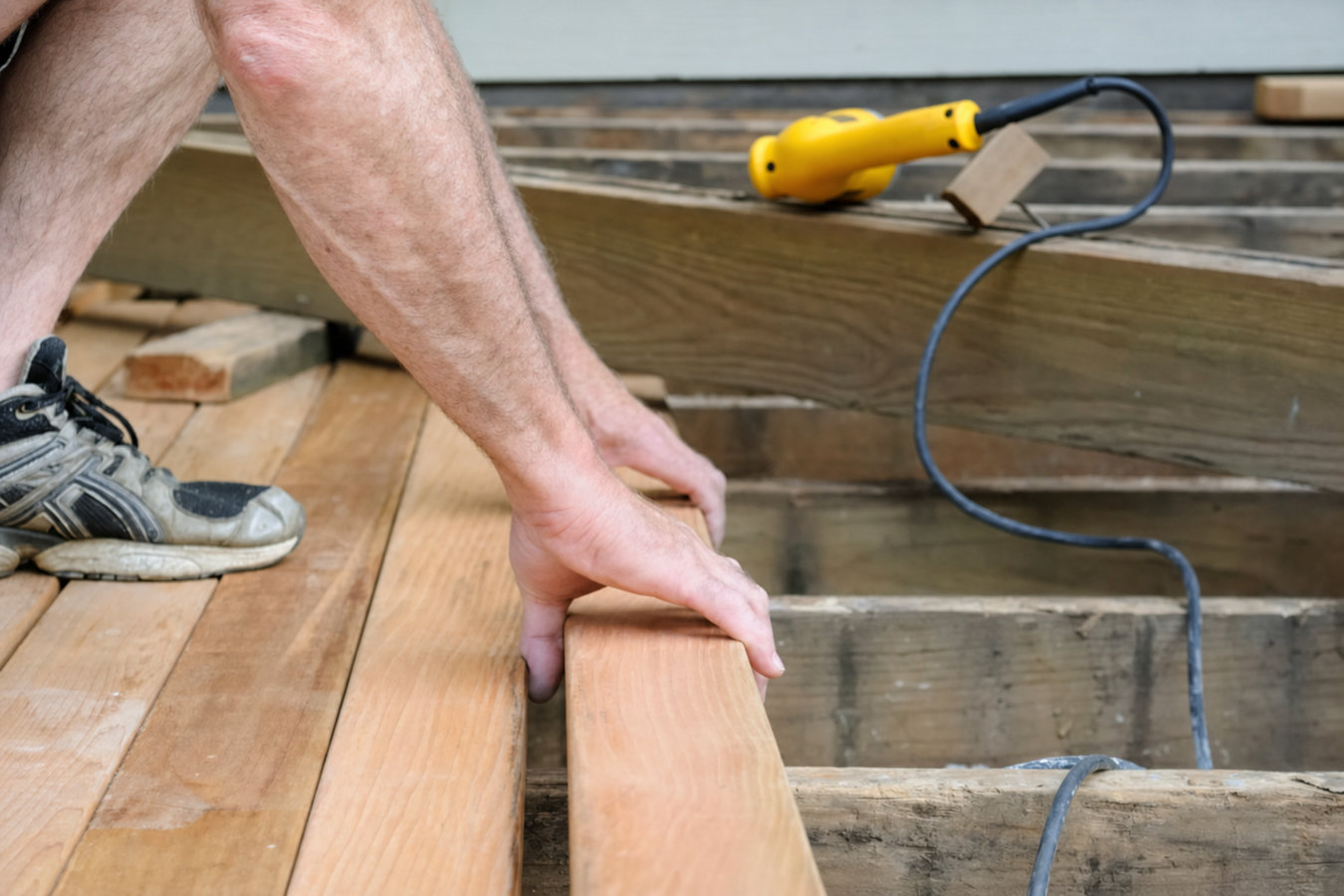
Soft boards, wobbly railings, or a deck that just does not feel safe anymore - we inspect the full structure, tell you honestly what it needs, and fix it or rebuild it right.
Deck repair and replacement in Indian Trail, NC starts with an honest look at the structural parts - not just the surface boards - and most jobs are completed in one to five working days depending on whether the work is targeted repairs or a full rebuild on new footings.
A large share of Indian Trail's homes were built between 2000 and 2015, which means many original pressure-treated wood decks are now 10 to 20 years old. That is the window when boards start checking and splintering, fasteners back out, and railings loosen. Indian Trail's combination of hot humid summers and Piedmont clay soil that shifts when wet makes those problems arrive faster than they would in a drier climate. Once repairs are complete, pairing the work with deck staining and sealing is the best way to slow down the next round of wear.
Not every problem deck needs to come down. If the posts, beams, and framing are still solid, replacing surface boards and re-securing railings is often enough. If the bones have rotted or the footings have shifted, a full replacement is the more honest answer - and we will tell you which is which before any money changes hands.
If you notice give underfoot - especially near the house wall, around the stairs, or at the edges - the wood has started to rot from the inside out. Indian Trail's humid summers speed up rot significantly, and what feels like a minor soft spot can hide a much larger problem underneath. Soft boards near structural connections are a safety issue.
A railing that shifts when you put weight on it is a fall hazard, not just an annoyance. This is especially important if you have kids or older family members using the deck. Loose railings are one of the most common issues on Indian Trail homes built in the early 2000s, where original hardware has had 15 to 20 years to work loose.
Boards pulling apart or sections of the deck that sit higher than others suggest the structure underneath may be shifting. Given the clay-heavy soil in the Indian Trail area, footing movement is a real possibility - and uneven decking is often the first visible sign. A contractor can tell you quickly whether it is a surface fix or something deeper.
Age alone is not a reason to replace a deck, but it is a reason to look closely. If your deck was part of the original construction on a home built before 2005 and has never had structural repairs, it is likely approaching the end of its reliable service life. An inspection now is better than finding out when something actually fails.
Every project starts with a complete structural assessment - we check the posts, beams, ledger board, and framing before we look at the surface. The ledger board, which connects the deck to the house, is one of the most common failure points on aging decks and the one most homeowners never think to inspect. If we find rot or an improperly flashed ledger, we address it as part of the repair scope - not as a surprise add-on. For decks that need more than repair, our deck railing installation service is a natural next step once the structure is solid.
For full replacements, we haul away the old structure, set new footings sized for Indian Trail's clay soil, frame the new deck, and install your choice of decking material - pressure-treated wood or composite. Composite costs more upfront but handles the humidity here better and rarely needs more than an annual wash. We pull the required Union County permit for all structural work and handle the inspection process from start to finish. You will have a written scope before work begins so there are no surprises on the final invoice.
Suited to homeowners whose deck structure is sound but surface boards, fasteners, or railings need attention.
For decks where the framing, posts, or house connection need repair before the surface work makes sense.
Complete teardown and rebuild with pressure-treated lumber - a cost-effective choice for homeowners who plan to stain and seal regularly.
Complete teardown and rebuild with composite decking - best for homeowners who want long-term durability with minimal ongoing maintenance in Indian Trail's humid climate.
Indian Trail's hot, humid summers - with heat pushing into the 90s and humidity regularly above 70 percent from June through August - are genuinely tough on wood decks. That combination speeds up rot, warps boards, and encourages mold and mildew growth. A deck that looks fine in spring can show real problems by late summer. The Piedmont clay soil beneath most Indian Trail properties adds another layer of stress: it expands when wet and contracts when dry, which can cause footings to shift over time if they were not set deep enough during the original build. Homeowners in Stallings and other nearby communities face the same soil and climate conditions, and the pattern of problems is consistent across the area.
A significant share of Indian Trail's housing stock was built between 2000 and 2015, and many of those original decks are now squarely in their first major repair window. For homeowners in Monroe and surrounding Union County towns, the same age-and-climate dynamic applies. Getting a professional assessment now - before a soft board or loose post becomes a safety event - is both cheaper and less disruptive than waiting until something fails. The North American Deck and Railing Association recommends annual deck inspections precisely because problems that are caught early are almost always easier and less expensive to fix.
We ask a few basic questions - deck size, what problems you have noticed, and whether it has ever had repairs. We schedule an on-site visit to look at the structure in person. We respond within one business day and work around your schedule.
We walk the deck and check what you cannot easily see yourself - posts, framing, the connection to the house. We take measurements and identify everything that needs to be addressed. You receive a written estimate spelling out the exact scope of work and total cost within a few days at no charge.
For most replacements and structural repairs in Indian Trail, we apply for a building permit through Union County before work begins. This typically adds one to two weeks before the crew can start. We handle the application - you do not need to call the county or track down paperwork.
For targeted repairs, your deck is back in service in one to two days. For full replacements, construction runs two to four days. The county inspector visits during structural work on permitted jobs - that is a normal part of the process. When we are done, the site is fully cleaned and we walk the finished deck with you.
We will walk the structure, give you an honest assessment, and provide a written estimate - free, no obligation.
(704) 520-5687We check the posts, framing, ledger board, and footings - not just the visible surface - before we give you a number. The biggest fear homeowners have is paying for repairs and then discovering the damage went deeper than anyone said. We prevent that by looking at everything first.
Navigating Union County's permit process is confusing if you have never done it. We submit the application, follow up on approval, and schedule the inspection - you do not have to make a single call to the county. A permitted repair is a protected repair.
If you live in one of Indian Trail's HOA communities, the last thing you want is a letter after the work is done saying the materials or design do not meet the neighborhood guidelines. We know how to work within those requirements and help you get the right approvals before work begins.
The North American Deck and Railing Association sets the standards that separate solid deck work from shortcuts. We build to those standards on every repair and replacement - including ledger flashing, proper footing depth for Piedmont soil, and correct fastener grade throughout.
North American Deck and Railing AssociationA deck that is repaired or replaced correctly - with the permit record to prove it - is a documented asset when it is time to sell your home. We build that documentation into every project from day one.
Once repairs are done, staining and sealing is the single most effective step for slowing future wear on any wood deck in Indian Trail's humid climate.
Learn MoreAfter structural repairs, upgrading to new railings improves both safety and appearance - we install wood, composite, and aluminum railing systems to match your deck.
Learn MoreSpring is the busiest season for deck work - reach out now to get your estimate before schedules fill up.