Loading...
Serving Indian Trail, NC and surrounding areas. (704) 520-5687
A solid wood deck at a straightforward price. Permit-ready builds from a state-licensed contractor who knows Indian Trail's soil, HOA process, and Union County requirements.
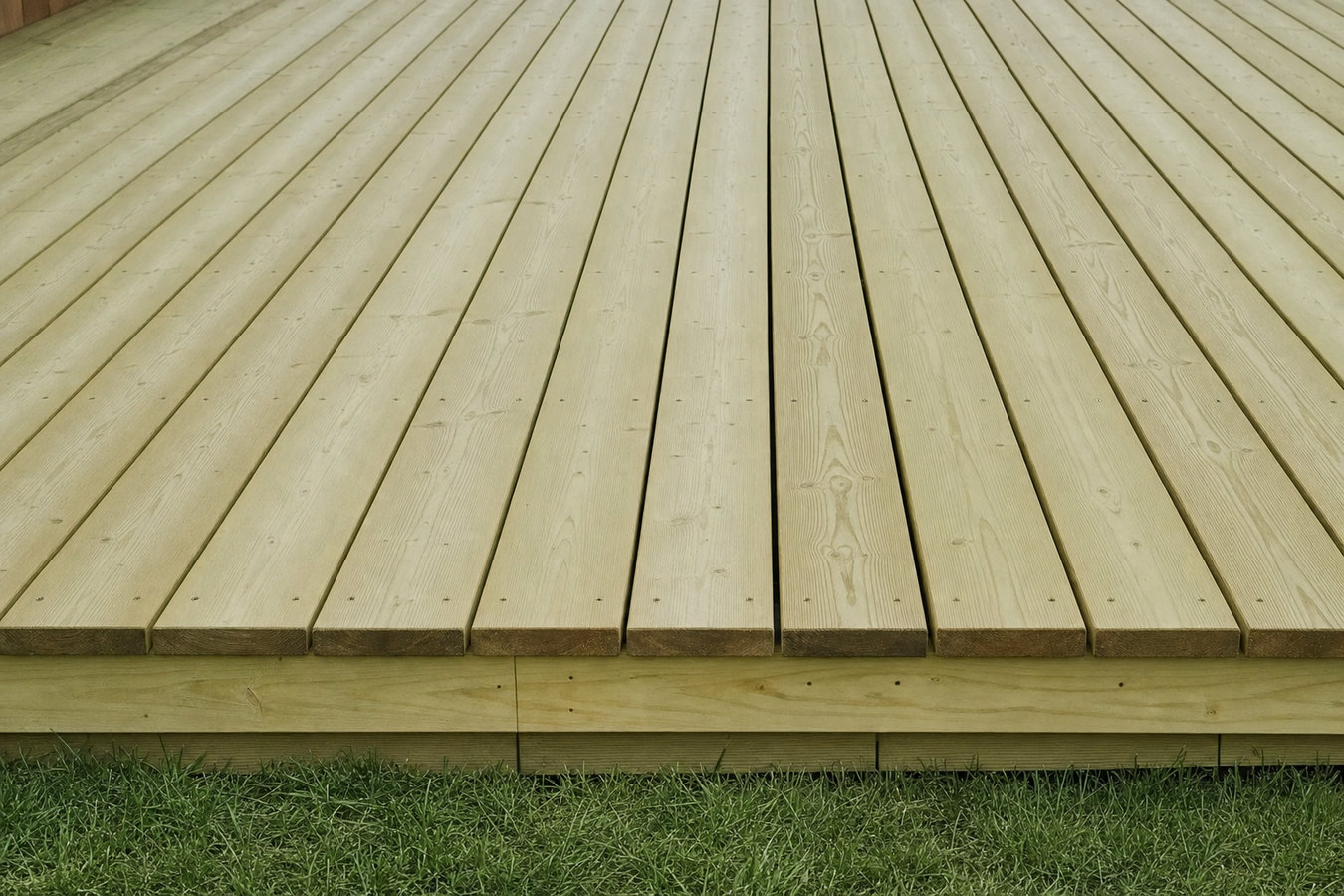
Pressure-treated wood deck construction in Indian Trail means building a durable outdoor structure using lumber that has been treated to resist rot and insects, most jobs in the 200-500 square foot range take three to seven days of active on-site work once the Union County permit is approved.
Pressure-treated wood is the most widely used decking material in the United States - and for good reason. It is affordable, widely available, and when it is built and maintained correctly, a pressure-treated deck in Indian Trail can last 25 years or more. Indian Trail's humid summers do accelerate wear if a deck is not sealed on schedule, but that is a manageable commitment. If you want to skip the maintenance altogether, our deck staining and sealing service can keep your investment protected year after year once the deck is built.
If your back door opens onto a small concrete step or bare grass, you are missing one of the most used features of homes in this area. Indian Trail neighborhoods are built for outdoor living - the lots are sized for it, and the spring and fall weather is genuinely pleasant. A deck gives you a defined, comfortable place to sit, grill, and spend time outside.
Walk across your deck and pay attention to how the boards feel. If any section feels soft, bouncy, or gives slightly when you step on it, moisture has started to rot the wood underneath. In Indian Trail's humid summers, rot moves quickly - a soft spot today can become a structural problem within a season or two.
Grab your deck railing and push on it firmly. It should feel completely solid. If it moves, rocks, or creaks, the connection between the post and the deck frame has weakened - often from years of moisture cycling through the wood. This is a safety issue, not just cosmetic, especially if children or elderly family members use the deck.
Boards that have pulled apart, nails or screws that have popped up above the surface, and wood that has turned deep gray with long surface cracks are all signs the deck has aged past the point where maintenance alone will fix it. In Indian Trail's climate, a deck that has not been sealed regularly will show these signs within eight to twelve years.
We build pressure-treated wood decks from footings to final walkthrough - site assessment, written quote, permit application, framing, decking boards, railings, and stairs. Every project gets a written estimate before work begins, so there are no surprise costs midway through. We handle the Union County permit application ourselves, and if your neighborhood has an HOA, we prepare the drawings needed for architectural review so you do not have to chase paperwork. For homeowners interested in comparing materials, our cedar wood deck construction page covers the natural wood alternative in detail.
We also offer new decks designed around how you actually use your yard - whether that means a simple flat platform for grilling, a multi-level layout for a sloped lot, or a structure with built-in seating and privacy screens. After installation, we walk you through what to watch for in the first year as the new wood dries out, and when to schedule your first sealing application to protect the investment long-term.
Best for homeowners who have no existing deck and want a complete pressure-treated structure designed for their yard and lifestyle.
Best for homeowners whose existing deck has failed structurally and needs to be torn down and rebuilt from the footings up.
Best for homeowners who want a complete outdoor structure including built-in features, not just a basic platform.
Best for homeowners adding their first deck and prioritizing a solid, permit-ready build at the most competitive price point.
Indian Trail sits on the Piedmont region's clay-heavy soil, which expands when wet and contracts when dry. If footings are not dug deep enough or sized correctly for this soil, a deck that looks perfectly level on day one can start to shift within a few years. A contractor who knows Union County accounts for local soil conditions in every footing design - and that detail is invisible once the boards go down, but it is what determines whether a deck stays solid for 30 years. Homeowners in Monroe and Waxhaw face the same soil conditions, and local experience matters in both communities.
Indian Trail has been one of the fastest-growing towns in the Charlotte metro area for the past decade, and a large share of its housing was built between 1990 and 2015 - meaning many homes are at exactly the age where the original deck needs replacement or a new one was never added. A significant number of those homes sit inside HOA communities that require plan submissions before outdoor construction can begin. We handle that process regularly and can tell you what your specific HOA typically requires before you commit to anything.
We respond within one business day. Then we come to your property to measure the space, look at where the deck will attach to your home, and talk through your options. Within a few days you receive a written quote that breaks down labor and materials - not a single lump-sum number.
We submit the Union County permit application on your behalf. If your neighborhood has an HOA, we prepare the drawings for their architectural review. Permit processing typically takes one to two weeks. We do not start construction before the permit is in hand.
The crew digs footing holes, pours concrete, and builds the frame. A county inspector verifies the framing before the decking boards go on - that inspection is built into every permit project. Then the decking, stairs, and railings are installed. Most residential decks are built in three to seven days.
After construction, we schedule the final county inspection. Once it passes, we walk you through the finished deck, explain what to watch for as the new wood dries, and leave the site clean. You receive a copy of the passed inspection before making your final payment.
We respond within one business day. A written, itemized quote - no lump sums, no surprises.
(704) 520-5687Our North Carolina general contractor license is active and publicly searchable on the NC Licensing Board for General Contractors website at nclbgc.org. Verifying takes about two minutes - we encourage you to check before you sign anything with any contractor.
One of the most common frustrations homeowners describe is a quote that balloons once work starts. Every estimate we provide breaks down labor and materials line by line. The number you agree to at the start is the number you pay at the end, barring something genuinely unexpected - and we tell you immediately if that happens.
Piedmont clay soil is the reason some Indian Trail decks start to lean within a few years of being built. We size and place footings with local soil conditions in mind. The American Wood Protection Association (awpa.com) sets the treatment standards for the lumber we use - and we match the treatment level to this climate.
A large number of Indian Trail homes sit inside planned communities with active HOAs. We are familiar with the typical requirements for this area and prepare the architectural review drawings as part of the pre-construction process - so there are no forced changes after the deck is already built.
Building a deck that holds up through Indian Trail's climate starts with doing the invisible work correctly - footings, framing, and permits. We have been doing that work in this area long enough to know exactly what it takes.
A premium natural wood option with better dimensional stability and a richer appearance than standard pressure-treated lumber.
Learn MoreProtect your new pressure-treated deck from Indian Trail's humidity with professional staining and sealing on the right schedule.
Learn MoreSpring books fast in Indian Trail - reach out now to lock in your build date before the season fills up.