Loading...
Serving Indian Trail, NC and surrounding areas. (704) 520-5687
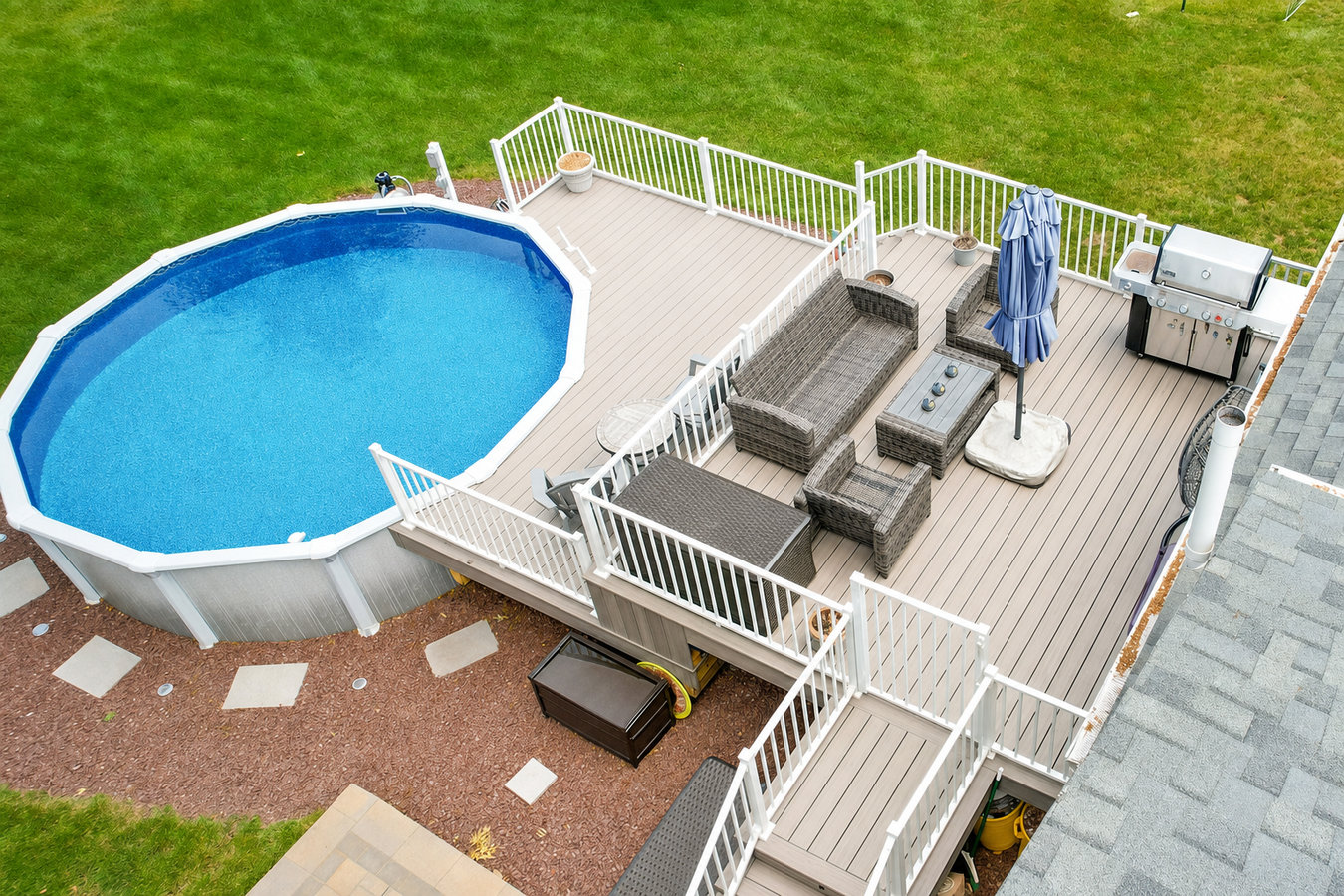
Indian Trail's clay soil and hot summers are hard on pool decks. We build the base right, choose surfaces that stay cool underfoot, and handle the permits so you do not have to.
Pool deck construction in Indian Trail involves grading the ground around your pool, building a properly compacted base, and installing the surface material of your choice - most projects take one to two weeks of active work once permits are in hand and materials are on-site.
A pool deck does more than give you somewhere to set out chairs. It connects your pool to the rest of your backyard, keeps mud and grass out of the water, and provides a safe walking surface that stays grippy when wet. In Indian Trail, those requirements come with an extra challenge: the red clay soil beneath most properties expands when it rains and shrinks when it dries out, which means a deck built on a poorly prepared base will crack and shift within a few years. Getting the base right is the most important part of the job.
If you already have a deck near your pool area that needs updating, or if you want to extend your outdoor living space beyond the pool, our custom deck design and build service can tie everything together into a cohesive outdoor space.
If you can see cracks spreading across your current pool deck - especially ones wider than a hairline - that is a sign the surface has been moving. In Indian Trail, the clay soil underneath expands and contracts with every rain cycle, and over time that movement shows up as cracks on top. A pattern of cracks across a large area usually means the deck needs to be replaced rather than patched.
If water collects in low spots on your deck and stays there for hours after a rainstorm, the deck is not draining the way it should. Standing water is a slip hazard, and it works its way into any small cracks and makes them bigger over time. In Indian Trail's wet spring season, a deck with poor drainage will deteriorate noticeably faster than one that sheds water properly.
A deck that once felt smooth but now has a rough, pitted texture has started to break down on the surface. This happens when the top layer of concrete wears away, often accelerated by pool chemicals splashing onto the deck repeatedly over the years. Once the surface reaches this point, resealing alone will not fix it - the deck needs to be resurfaced or replaced.
If you have just had a pool installed - or you are planning one - and the surrounding area is still bare dirt or grass, that is the clearest sign you need a deck. Grass around a pool turns to mud quickly, and mud tracked into the water shortens the life of your pool equipment. Getting the deck done at the same time as the pool, or shortly after, protects your investment from the start.
We build pool decks in a range of materials to match your budget, your HOA guidelines, and how you want the finished space to look and feel. Brushed concrete is the most common choice in this area - textured for grip, relatively cool underfoot, and durable in Indian Trail's climate. For homeowners who want something more distinctive, stamped concrete or pavers can achieve the look of stone or brick with better long-term performance than natural stone in soil that moves as much as Union County's red clay does. Our vinyl fence installation service is a natural complement to a pool deck project - adding a fence around the pool area meets local safety expectations and gives the space a finished, intentional look.
Every pool deck we build starts with proper site preparation - grading the ground so water drains away from the pool and the house, compacting the subbase to resist the movement of Indian Trail's clay soil, and allowing the right curing time before the surface takes foot traffic. For homeowners who want to go bigger, we can also integrate the pool deck into a broader outdoor living design. See our custom deck design and build page for more on what is possible.
The most popular choice in the Indian Trail area - textured for grip when wet, stays cooler than smooth surfaces, and holds up well in the local climate.
Best for homeowners who want the look of stone or brick with the durability and lower maintenance of poured concrete.
Individual pieces that can be replaced if one cracks or shifts - a smart choice in clay-heavy soil where ground movement is a factor.
The premium option for homeowners who want a high-end look that is also genuinely durable and slip-resistant when properly finished.
Indian Trail sits in Union County on the classic Piedmont red clay soil that runs throughout the Charlotte metro area. That clay expands when it gets wet and shrinks when it dries out - and those cycles repeat through every wet spring and dry summer. A pool deck that is not built on a properly compacted, well-graded base will reflect that movement in cracks and shifting within a few years. It is one of the most important questions to ask any contractor before you sign anything: how do they prepare the ground before they pour? We serve homeowners throughout the area, including Stallings and Mint Hill.
Indian Trail's hot summers also make surface temperature a real consideration. Dark or dense surfaces absorb heat and hold it - which becomes a problem for families with young children who run barefoot from the back door to the pool in July. Lighter-colored finishes and textured surfaces manage this noticeably better. Indian Trail's rapid residential growth also means most newer subdivisions are governed by HOAs with rules on what can be built and what materials are allowed - something that needs to be addressed before construction begins, not after. The Pool and Hot Tub Alliance publishes safety and construction standards for pool decks that inform best practices for residential projects like these.
Contact us and we will respond within one business day. We will come to your yard, look at the space, take measurements, check the slope of the ground, and talk through your material options in person. You will get a written quote with no obligation.
In Indian Trail, a building permit is typically required before deck construction begins - we handle pulling the permit for you. If your neighborhood has an HOA, we can provide the documentation the association needs to review before work starts.
Before any material goes down, we remove old material if there is any, grade the soil so water drains away from both the pool and the house, and compact the base. In Indian Trail's clay soil, this preparation work is where the quality of the job is really determined.
The deck goes in - whether that is poured concrete, pavers, or stone. We keep you updated daily on progress. After curing and the county inspection, we walk you through the finished deck, explain how to care for it, and confirm when it is ready to use.
Free on-site estimate. No obligation. We will come out, look at your yard, and give you a written quote.
(704) 520-5687Union County's red clay soil expands when wet and shrinks when dry - and a contractor who ignores that will build a deck that cracks within a few seasons. We grade and compact the base specifically to handle how this soil moves through Indian Trail's wet springs and dry summers.
Pool decks in Indian Trail require a building permit through Union County Development Services, and we handle pulling that permit for you. That means an inspector checks the work at key stages - which protects you as the homeowner and gives you documentation if you ever sell the property.
We help you choose a finish that stays comfortable barefoot even when the sun is at its peak. Lighter-colored concrete finishes and textured surfaces absorb less heat than dark, smooth ones - a detail that matters a lot in a town where July temperatures regularly push into the low 90s.
A large share of Indian Trail's subdivisions have active homeowners associations with rules on what can be built and what materials are allowed. We know the process and can prepare the documentation your HOA needs for review before a single shovel goes in the ground.
Building a pool deck in Indian Trail requires local knowledge - the soil conditions, the permit process, and the HOA landscape are all specific to this area. We have been working in this community long enough to know what matters and what causes problems down the road.
For installation standards on concrete pavers, see the Interlocking Concrete Pavement Institute (ICPI).
Add a safe, low-maintenance fence around your pool area to meet safety requirements and define your outdoor space.
Learn MoreExtend your outdoor living area with a custom deck that connects your pool deck to the rest of your backyard.
Learn MoreIndian Trail contractors book fast once spring arrives - call now to lock in your start date before the season fills up.